
THE PRESSURE IS ON
TO DIAGNOSE CKD
As few as 10% of adults with ckd are diagnosed, even in stage 3 1,2
See why the pressure in on to
diagnose CKD in its earlier stages
High prevalence low diagnosis
CKD is a life-threatening disease that is vastly underdiagnosed.3

Only 1 in 10 American adults with Stage 3 CKD are diagnosed.1
Early intervention can make a difference
By identifying patients and intervening early, you can help slow the progression of kidney failure, reduce the risk of cardiovascular disease, and help your patients live a longer, dialysis-free life.3-5
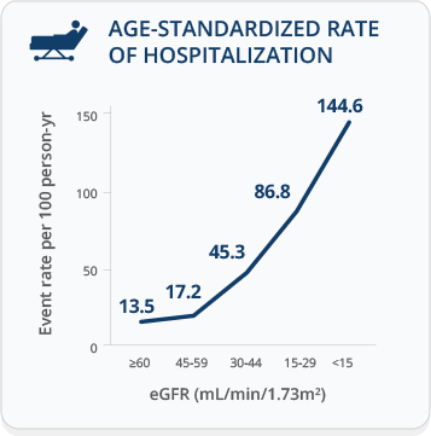
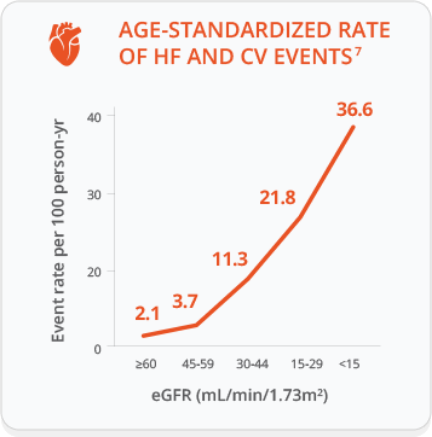
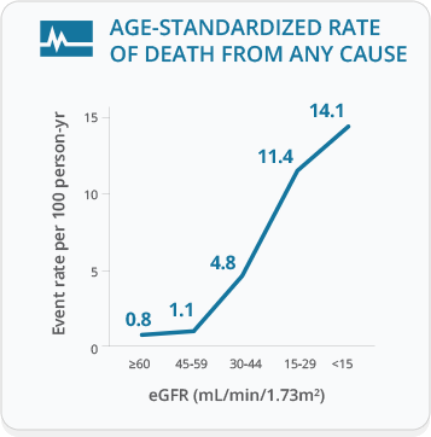
When CKD progresses, the risk of adverse outcomes increases 7
How well are your kidneys working?
Know your kidney numbers
The eGFR calculations in your patients’ metabolic panel make it easy to track kidney function and diagnose CKD. Screen your patients' eGFR regularly, especially those patients who are high-risk for CKD. For patients who've experienced kidney function loss, take action. The following chart can help explain eGFR in terms of "kidney function remaining" to your patients.
THE FIVE STAGES OF CKD
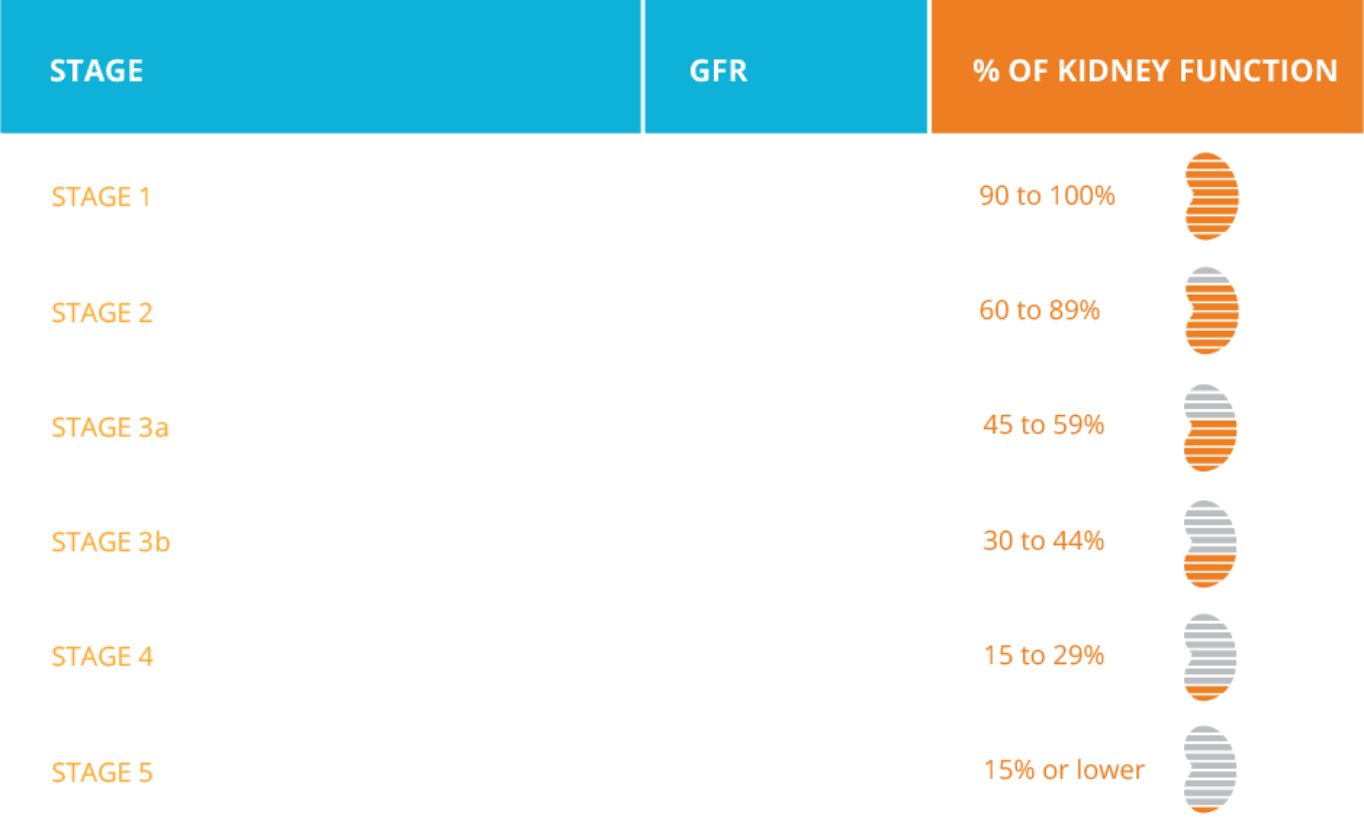
Adapted from the National Kidney Foundation.
Underlying mechanism of CKD
When CKD is left unchecked, kidney function continues to decline.3,9 Here’s why.
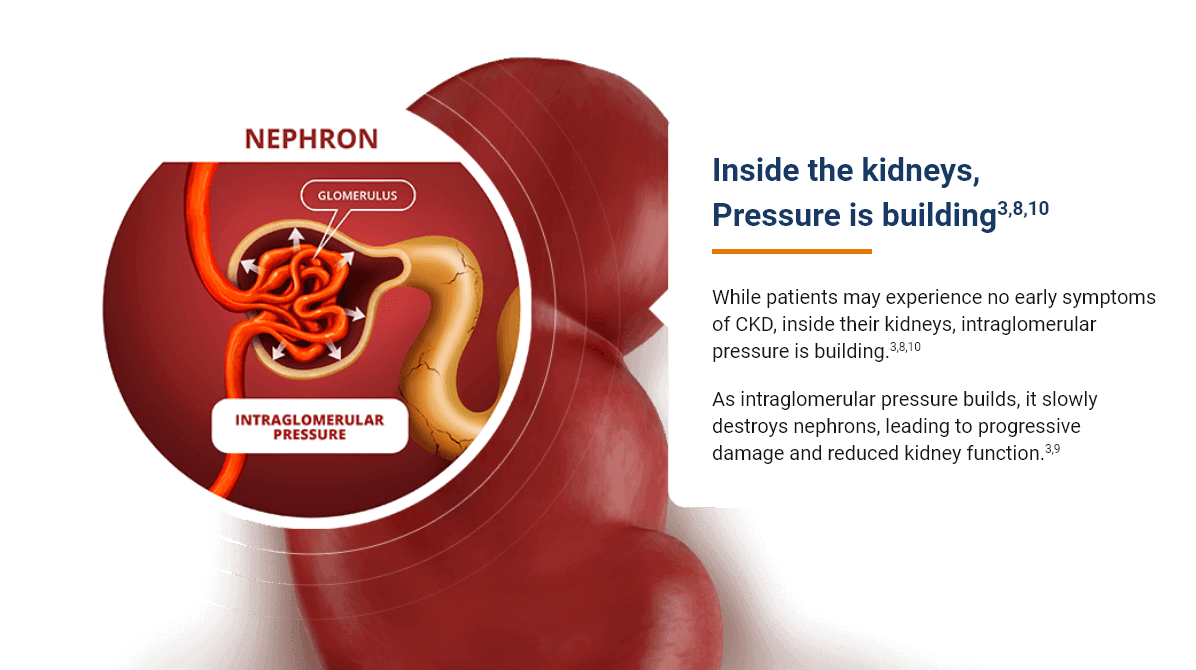
Identify risk factors that can be controlled through counseling and treatment
Los pacientes que cumplen uno o más de estos criterios se encuentran con un riesgo mayor y deben examinarse de forma regular y monitorearse de forma activa para la ERC.4,8 Explaining modifiable risks to patients can help motivate them to take steps to protect their kidneys.
How to Talk of CKD with Patients
Having a conversation with your patients is an important step in slowing the progression of CKD and prolonging dialysis-free living. And by talking to patients early, you can help them avoid surprises later. So when you see a decline in eGFR, kick off the conversation.
Take the pressure off by diagnosing early
We’re here to help. Resources for you and your patients.
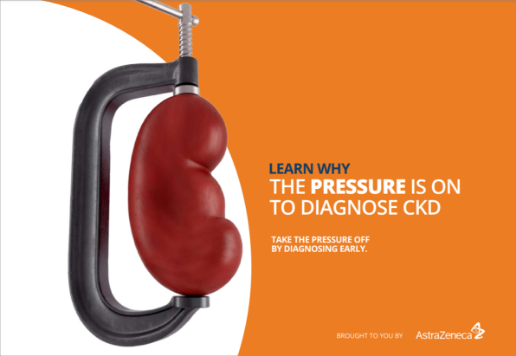
Learn why the pressure is on to diagnose Chronic Kidney Disease
Download the CKD Guide and learn how early intervention can have a significant impact for your patients.
Start the conversation about Chronic Kidney Disease
Learn how to talk to your patients about CKD and kidney health in the Patient Counseling Resource.
Inicie la conversación sobre la Enfermedad Renal Crónica
Descubra cómo hablar como sus pacientes sobre ERC y salud renal en la Herramienta sobre Asesoría para Pacientes.
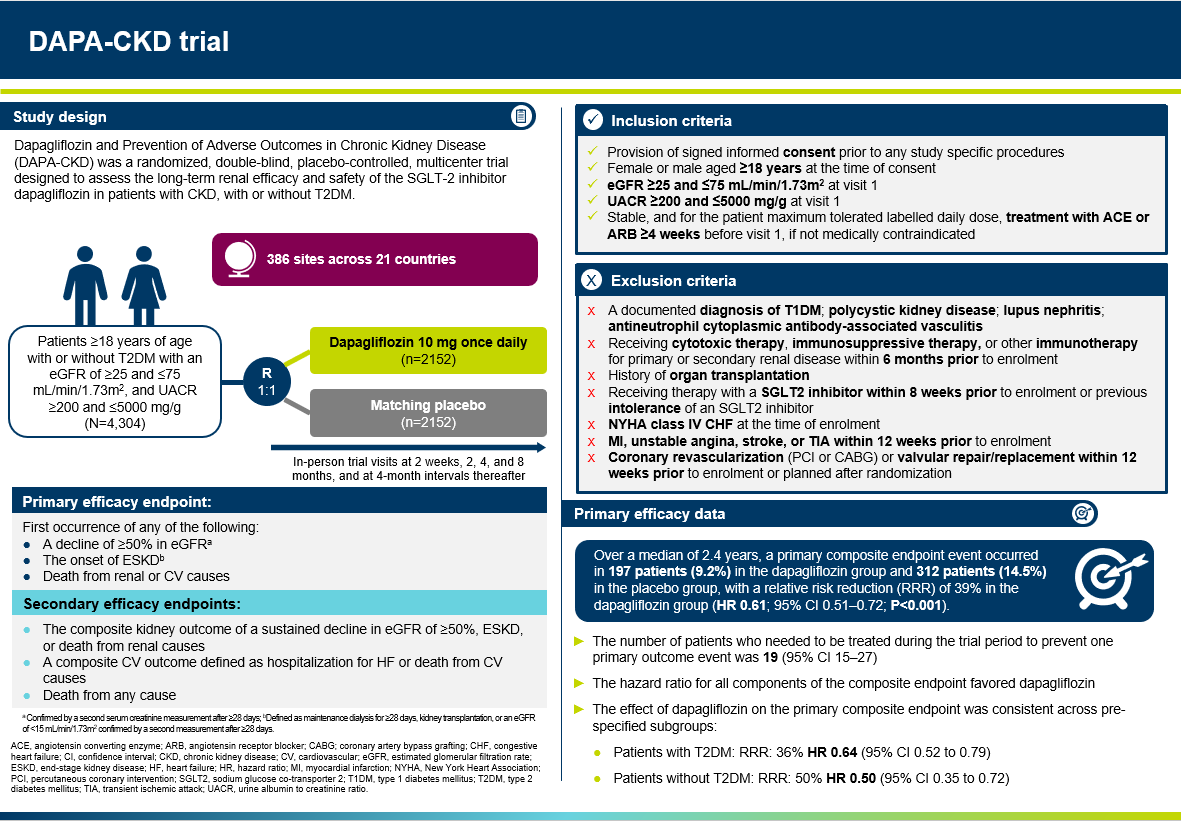
Dapagliflozin and Prevention of Adverse Outcomes in Chronic Kidney Disease (DAPA-CKD)
was a randomized, double-blind, placebo-controlled, multicenter trial designed to assess the long-term renal efficacy and safety of the SGLT-2 inhibitor dapagliflozin in patients with CKD, with or without T2DM.
References:
1. Ryan TP, Sloand JA, Winters PC, Corsetti JP, Fisher SG. Chronic kidney disease prevalence and rate of diagnosis. Am J Med. 2007;120(11):981-986.
2. Ravera M, Noberasco G, Weiss U, et al. CKD awareness and blood pressure control in the primary care hypertensive population. Am J Kidney Dis. 2011;57(1):71-77.
3. Chronic kidney disease basics. Centers for Disease Control and Prevention. Page reviewed February 7, 2020. Accessed November 18, 2020.https://www.cdc.gov/kidneydisease/basics.html
4. Kidney Disease: The Basics. National Kidney Foundation. Published May 2020. Accessed November 20, 2020.https://www.kidney.org/news/newsroom/factsheets/KidneyDiseaseBasics
5.Alabama Department of Public Health. Special Task Force on Chronic Kidney Disease report. April 2007. Accessed November 18, 2020https://www.alabamapublichealth.gov/publications/assets/kidneydiseasereport.pdf
6.Lewis EJ, Hunsicker LG, Clarke WR, et al; Collaborative Study Group. Renoprotective effect of the angiotensin-receptor antagonist irbesartan in patients with nephropathy due to type 2 diabetes. N Engl J Med. 2001;345(12):851-860.
7.Go AS, Chertow GM, Fan D, McCulloch CE, Hsu C-Y. Chronic kidney disease and the risks of death, cardiovascular events, and hospitalization. N Engl J Med. 2004;351(13):1296-1305.
8.Kidney disease statistics for the United States. National Institutes of Health. National Institute of Diabetes and Digestive and Kidney Diseases. December 2016. Accessed November 18, 2020. https://www.niddk.nih.gov/health-information/health-statistics/kidney-disease
9.Schnaper HW. Remnant nephron physiology and the progression of chronic kidney disease. Pediatr Nephrol. 2014;29(2):193-202.
10.Collard D, van Brussel PM, van de Velde L, et al. Estimation of intraglomerular pressure using invasive renal arterial pressure and flow velocity measurements in humans. J Am Soc Nephrol. 2020;31(8):1905-1914.